
Clinical Psychology Training & Internship Opportunities in Utah
Comprehensive Clinical Supervision | 100% Virtual Training Program
Welcome to the professional training directory at Healing Phoenix Psychology.
We are a 100% virtual private practice providing comprehensive mental health services, depth-oriented psychotherapy, and psychological evaluations to adults across the state of Utah.
We balance rigorous professional competencies with a humanizing, relational environment. Our supervisory framework utilizes a collaborative, developmental mentorship model designed to foster professional autonomy and clinical confidence. Trainees are treated as junior colleagues, supported in finding their authentic clinical voice, and trained in modern telehealth frameworks and private practice administration within a diversity-informed and respectful environment.

Training Program Overview
We offer ongoing Paid Clinical Externships and Internships designed to provide robust telehealth experience, specialized diagnostic training, and developmental mentorship. Below are the core specifications of our training opportunities:
-
Position Levels: Doctoral Externs & Master's-Level Interns / Associates
(We provide dedicated supervision and training placements for doctoral practicum/externship students as well as advanced master's-level clinical interns). - Clinical Setting: 100% Virtual Private Practice / Remote Telehealth (Serving clients statewide across Utah)
- Target Demographics: Diverse Adult Population (Ages 18+)
- Compensation: $40 – $50 per hour (Commensurate with academic level and clinical experience)
- Clinical Supervision: High-level, individualized direct clinical supervision and mentorship provided by either a Licensed Psychologist or an experienced LCSW clinical supervisor (depending on program requirements).
Customizable Clinical Tracks
We recognize that every clinician-in-training possesses distinct career aspirations and academic requirements. Trainees at Healing Phoenix Psychology may select a single area of emphasis to gain specialized mastery, or combine multiple tracks to build a hybrid clinical practicum tailored to their unique professional goals.
1. Trauma-Informed Practice (Mindful-Somatic Focus)
- Clinical Emphasis: Specialized training in conceptualizing and treating acute, complex, relational, and developmental trauma through an experiential, somatic lens.
- Potential Funded Certification: Participation in this track may include select funded formal Mindful Somatic Trauma Training leading to a professional certificate through the Integrative Psychology Academy, contingent upon the trainee’s agreed-upon weekly clinical volume and overall length of training commitment.
2. General Mental Health & Group Psychotherapy
- Versatile Caseload: Trainees manage a diverse outpatient caseload addressing mood disorders, chronic anxiety, identity development, and major life transitions within a remote framework.
- Group Facilitation: Opportunities to co-lead up to two interpersonal or psychoeducational therapy groups, mastering group dynamics and facilitation within a modern virtual environment.
3. Comprehensive Psychological Evaluation & Testing
- Diagnostic Proficiency: Focuses on building proficiency in the remote administration, scoring, and interpretation of comprehensive psychological test batteries assessing cognitive, executive, adaptive, and personality domains. (Note: Full test battery administration is primarily tailored for doctoral-level competencies).
- Advanced Report Writing: Trainees receive guidance in integrating complex clinical data into actionable, validating evaluations and differential diagnoses (including neurodivergence assessments such as ADHD and Autism).

Our Supervisory Pedagogy & Core Clinical Lenses
Our licensed clinicians have diverse clinical backgrounds and can provide supervision across a wide spectrum of foundational and contemporary evidence-based modalities—including ACT, CBT, DBT, CFT, IPT, Yalom’s group psychotherapy, and Feminist psychotherapies—tailored to your specific academic requirements and client caseload.
In addition to modality-specific supervision, trainees learn to conceptualize cases and guide interventions through four core clinical frameworks:
Four Core Clinical Frameworks
Trauma-Focused, Mindful-Somatic & Experiential Care
Understanding autonomic nervous system adaptations, nervous system regulation, bottom-up processing, and integrative parts work (informed by therapies like SE, EMDR, SMPT, IFS, and Hakomi).
Culturally Informed Care (CIT)
Integrating systemic awareness, racial identity development, and anti-oppressive frameworks across all clinical conceptualizations.
Attachment-Based & Relational Dynamics:
Cultivating emotional self-awareness, assertiveness, and relational repair through attachment and interpersonal process models.
Existential & Values-Centered Care
Navigating identity development, meaning-making, cultural and religious concerns, and faith transitions.
Meet Your Potential Supervisors
You can choose either a licensed Psychologist or Licensed Clinical Social Worker depending on program requirements. We invite you to explore their clinical backgrounds, theoretical orientations, and academic credentials to see who aligns best with your professional goals.
Frequently Asked Questions (FAQs)
Are the clinical externships and internships 100% virtual, and do trainees need to reside in Utah?
Yes. Our entire training program is 100% virtual. You will provide remote outpatient therapy and psychological testing to adults across Utah from the comfort of your home office. Because we operate under Utah state licensure, your clinical work will follow state telehealth regulations and your university’s remote placement guidelines—but you will enjoy the full flexibility and autonomy of a modern private practice schedule.
Are clinical trainees compensated, and what financial or certification benefits are included?
Yes. We treat our trainees as junior colleagues, which means we pay a competitive rate of $40 to $50 per hour based on your academic level and clinical experience. If you commit to a dedicated weekly hour volume and duration within our Trauma-Informed track, we also sponsor select trainees for formal Mindful Somatic Trauma Training, leading to a professional certificate through the Integrative Psychology Academy.
How are caseloads assigned, and can I tailor my placement to meet specific degree requirements?
We don’t do one-size-fits-all training. You can customize your caseload around three core tracks: Trauma-Informed Practice, General Mental Health & Group Therapy, or Comprehensive Psychological Testing. Because our supervisors come from diverse clinical backgrounds, we will tailor your mentorship to fit your program’s required modalities—whether that is CBT, ACT, DBT, IPT, or Feminist therapy—while grounding your work in our practice’s core frameworks.
Application Process
We accept applications on an ongoing, rolling basis for upcoming academic semesters and training cohorts.
Interested doctoral and master’s-level students should submit a Curriculum Vitae (CV) and a brief statement of interest outlining their clinical goals, degree program, desired track(s), and anticipated availability directly to our clinical training team at:
Note for Directors of Clinical Training (DCTs): We welcome collaborative partnerships with university clinical training programs. We are readily available to provide our clinical CVs, licensure documentation, training program overviews, or any supplementary materials required for your formal site-vetting and onboarding process. Please contact us directly to discuss how Healing Phoenix Psychology can serve as an accredited externship or internship placement for your students.
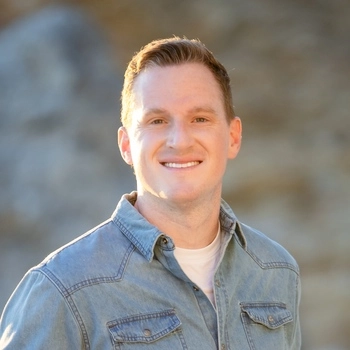
About Adam McDonald, PhD
Dr. Adam McDonald is a Licensed Psychologist who utilizes an experiential, trauma-focused, highly integrative, mindful-somatic approach to help people move from managing symptoms to resolving what’s underneath them. He understands that true healing requires integrating the mind and body, allowing the nervous system to return to a state of safety and connection. Deeply attuned to the realities of suffering and healing, Adam views himself as a fellow traveler in the therapeutic process. Learn more about him and discover his approach here.