
Faith Transitions, Religious, and Existential Trauma Therapy in Utah
“…How will I know where to go? How will I find my way? No map! But then my midlife soul whispers, ‘There was a time before maps when pilgrims travelled by the stars.’ It is time for the pilgrim in me to travel in the dark, to learn to read the stars that shine in my soul. I will walk deeper into the dark of my night. I will wait for the stars. Trust their guidance. And let their light be enough for me.”
— Joyce Rupp
Why does my faith or identity feel like it’s falling apart?
Understanding faith shifts and existential trauma
An existential crisis can be one of the most destabilizing experiences a person can face – especially if faced alone. Whether you are navigating a sudden loss of identity, a collapse of meaning and purpose, a major life transition, or a profound shift in your faith and worldview, this experience is much more than an intellectual exercise.
Navigating existential trauma is a deep, neurobiological journey that can impact your entire sense of safety and belonging. For those raised religious, this experience can involve a shift in your beliefs while staying within your tradition, re-evaluating your path or beliefs, or navigating a full exit or transition.
It is easy to think of religion as just a set of ideas. But just like other cultural systems, it can be a comprehensive structure—providing a community, a shared language, a system of meaning, and a framework to build an identity around. It shapes:
- How you make sense of the world
- How you regulate distress
- How you process right and wrong
- Where and how you find belonging
- Your understanding of who you are
When your faith shifts or you experience an existential crisis, it can feel like the foundation of your life has a crack in it, and your nervous system interprets that fracture as a loss of safety and a threat to identity.
“The cave you fear to enter holds the treasure you seek. The big question is whether you are going to be able to say a hearty ‘yes’ to your adventure.” — Joseph Campbell

Understanding the support structures of religion
To understand why a faith shift feels so heavy, it helps to look at the powerful support structures religion often provides:
Physical / Somatic
- Life Structure & Routine: A steady pattern that brings consistency and predictability, establishing a grounding rhythm for everyday life, helping to organize habits and reduce daily decision fatigue.
- Ritual & Traditions: Ways to connect meaning to the physical body and to others, aiding in psychological integration; also aiding in the processing of complex emotions (such as letting go of guilt or processing grief).
- Grounding Spaces: Environments that engage your senses, such as specific buildings, nature, immersive music, or art—helping to calm the nervous system while also helping one to connect and process other profound experiences.
- Hobbies & Passions: Intentional physical outlets, community responsibilities, and creative activities that actively channel your time, energy, focus, and sense of purpose.
Psychological / Existential
- Core Values & Wisdom: A provided moral compass that helps one navigate priorities and value systems, acting as a guide through complex life circumstances.
- Meaning & Purpose: A psychological framework for making sense of life’s direction, navigating decisions, and processing the experiences of joy and suffering
- Order & Control: A system for organizing chaos in the human experience and the universe, establishing a clear external and internal locus of control to navigate life’s unpredictability and find security in the face of the unknown.
Worldview & Cosmic Structure: A foundational map or lens of reality through which we interpret the nature of existence and experience, the origins of the universe, and our place within the cosmos. - Awe & Transcendence: Encountering something vast or complex that stretches beyond our immediate understanding; connecting to a deeper sense of self, and/or experiencing a profound interconnectedness with nature, humanity, and the broader universe.
Relational
- Identity & Belonging: A secure sense of self and an understanding of how that identity is valued, accepted, and integrated within a larger social community.
- Community & Social Safety: Mutual support and shared resources that provide the protection and stability humans require to feel fundamentally safe and have essential needs met.
- Direction & Decision-Making Support: Access to the shared wisdom, trusted advice, and lived experience of a community, providing relief from the burden of making every life choice in isolation.
- Shared Moral Language: A shared vocabulary for discussing values, beliefs, and behaviors, helping to create social cohesion and mutual understanding without the burden of constant explanation or justification.

Is religious or existential trauma real?
When the cost of authenticity is belonging
Humans have many essential core needs. These can include physical well-being, connection, peace, play, autonomy, authenticity, worth, and meaning.
During a religious or existential shift, if a physical, psychological, or relational structure is overly rigid or demanding, you might find yourself feeling forced to choose between…
- Authenticity vs Belonging
- Identity vs Connection
- Autonomy vs Security
- The ‘Unknown’ vs The ‘Familiar’
- Self-worth vs Community Values
- Internal Peace vs Community Peace
- Truth vs Shared Meaning
This is a big way humans can experience existential or religious trauma. When your core needs are threatened, and you’re forced to sacrifice one need in order to meet the other, you’re left trying to protect one while abandoning another. And the nervous system processes this conflict like a trauma.
The body’s stress response
A faith or existential transition can often involve moving from a state of belief to a state of the unknown, which can trigger a significant stress response in the nervous system. When fundamental psychological, social, or existential needs are lost or threatened, the body can feel a profound lack of safety. This can lead you into continuous or alternating states of:
- Fight or flight (high arousal): Existential anxiety, panic about ‘getting it wrong,’ or anger toward the system you are re-evaluating.
- Freeze or fawn (shutdown or appeasement): Feeling numb, hopeless, or ‘lost’ as the map you used to navigate life fades, or masking your authentic self to avoid conflict and appease your community.

“But little by little, as you left their voices behind, the stars began to burn through the sheets of clouds, and there was a new voice which you slowly recognized as your own, that kept you company as you strode deeper and deeper into the world.”
— Mary Oliver

Who am I without my beliefs?
The existential void & psychological nihilism
When psychological, social, or existential needs are not met or replaced, this can lead to what some call an Existential Void or state of lost meaning. When an external “map” gets lost or “collapses” and a new one has not yet been built, you may feel lost.
The danger of the void
When a person loses too much at once—such as community belonging, family support, identity, and purpose—the result is a full “meaning-collapse,” also known as Psychological Nihilism. This is a state of profound emotional vulnerability where the structures of the brain are overwhelmed by the loss of these fundamental needs.
Developmental trauma and neurodivergence
When rigid religious beliefs and behaviors are instilled during your childhood years, they become the core foundation of your psychological development. Losing this framework doesn’t just change your worldview; it can trigger deep developmental trauma as your earliest sources of safety and identity are uprooted.
The ‘cracking’ of this childhood framework doesn’t just feel like a leak—it feels like a complete structural failure. This collapse can also feel harder for neurodivergent individuals (such as those with ADHD or Autism). If your brain is wired for high logical consistency, relies on predictable structures, or holds a profound sensitivity to justice, this experience of structural failure can feel even more overwhelming.
“If we have to choose between our authenticity and our attachment, we will always choose attachment… until we find a way to reclaim our true selves”
— Gabor Mate
Rebuilding after a faith or existential transition
Every circumstance and shift is unique
A key focus of existential therapy isn’t about pushing you toward a specific conclusion. Growing, healing, and integration involve recognizing your core human needs and consciously choosing how you want to fulfill them moving forward.
When a faith shift disrupts fundamental physical, psychological, or relational needs, those core aspects of your life need to be rebuilt. Our goal is to help you build a framework that honors your complete, authentic self.

Do I need to leave my faith to heal from existential or religious trauma?
A path toward healing and integration
Healing from religious trauma or navigating a faith shift isn’t about following a single ‘correct’ path, leaving a faith, or abandoning heritage. It’s about integration.
Rebuilding your life is not a binary choice between being religious and non-religious. There is a vast spectrum of secular and spiritual worldviews, and you can navigate toward the paths where you feel most at home. Your new framework might fall anywhere along a wide continuum: from strict religious observance to nuanced religious belief, mysticism, non-religious spirituality, secular humanism, existentialism, agnosticism, or nihilism.
For some, this may look like moving away from external structures to find an ‘internal compass,’ but for others, it means redefining their relationship with their community or higher power in a way that is personal and authentic to their own unique belief system.
Rebuilding within your faith: Belonging in a more nuanced way
Faith shifts don’t always mean an exit from a religious community or tradition. Some choose to remain within their religious community because of family, culture, or personal meaning, even as internal beliefs shift.
If you experience a faith shift but decide that staying in your community or religion is what feels most authentic and true to you, the therapeutic work focuses on how you engage with that system. Rebuilding these core aspects within your faith is about learning how to shift your experience from a place where your needs are compromised to a place where your needs for well-being are fully met.
Resource Guide: Staying in Your Tradition
If you choose to remain within your tradition, what does it actually look like to shift your religious experience away from fear and compulsive obligation and toward nervous system safety and authenticity?
Here is a side-by-side guide called the Rebuilding Life While Staying In Religion Worksheet. It breaks down concrete examples of how to shift your routines, community boundaries, and practices from a place where your well-being is compromised to a place where your needs are met.

“Be patient toward all that is unsolved in your heart and try to love the questions themselves, like locked rooms and like books that are now written in a very foreign tongue. Live the questions now. Perhaps you will then gradually, without noticing it, live along some dinstant day into the answer.”
— Rainer Maria Rilke
What do you do when the map you trusted no longer works?
Translating your needs into a non-religious framework
For many, a faith shift reveals that they are unable to reconcile their needs within their religious or cultural frameworks authentically, meaningfully, or in a safe way. If you decide that stepping away is the healthiest choice for you, it is incredibly common to experience a sense of panic or an “existential void”– and for those leaving highly rigid or fundamentalist systems, even psychological nihilism.
Deconstruction – Reassessing the ‘old map’
When the “map” you trusted no longer works, it can feel as though you have lost your community, your purpose, or your connection to something beyond yourself. But the underlying needs these structures meet are universally human. Leaving a specific religion does not mean you have to leave these core needs behind; you can translate them into a new context.
Reconstruction – Forging the ‘new map’
If you choose to transition away from traditional religion, the therapeutic goal isn’t to throw away your human need for daily rhythm, profound ritual, awe, or moral grounding—it is learning how to intentionally translate those needs into a self-authored life.
Resource Guide: Navigating a Faith Transition
Wondering how to actually replace things like daily prayer, scripture study, or congregation belonging in a secular or non-religious context?
Here is our Rebuilding Life After Leaving Religion Worksheet, which maps out real-world, side-by-side examples of how to take traditional religious support structures and translate them into healthy, self-authored practices that regulate your nervous system and foster genuine belonging.


When to seek professional support
Our approach to religious and existential therapy
We provide a safe, empowered, and respectful space for all individuals to navigate faith shifts authentically. We recognize that the process of evaluating one’s personal faith is highly nuanced and requires deep respect for each individual’s mental health state, unique neurobiology, personal needs, and cultural traditions. Our religious and existential trauma therapy services are provided with transparency and informed consent.
Whatever your specific worldview or belief system is, our goal is to help you build a purpose-driven life that feels safe, personal, and open to the experiences of awe, transcendence, and interconnectedness—whether you believe that is experienced as a profound cognitive state or a deep spiritual reality. We are experienced in working with individuals from a variety of different backgrounds, including nihilism, humanism, non-religious spirituality, or nuanced/traditional religion.
The ultimate aim of our work together is to facilitate a mental and somatic shift toward a life where your needs are met with safety, authenticity, and empowerment. Our focus will be on helping you develop an inner compass—a grounded internal sense of direction—so that you can navigate your unique path and community with confidence.
A place to begin
If you’re in the middle of a faith shift or an existential crisis and you’re struggling to make sense of what you’re experiencing, please know – you don’t need to go through this alone. A starting point can be our free mental health screening, which offers a structured way to reflect on your current experience and receive a thoughtful, personalized response from a psychologist.
Therapy provides a space to work through both the somatic, psychological and relational layers of this transition at a pace that allows for real, lasting integration.
If interested, please contact us via the link below to schedule a 15-minute complimentary discovery call. We’ll be happy to answer your questions and help you determine if therapy for religious trauma is a good next step for you.
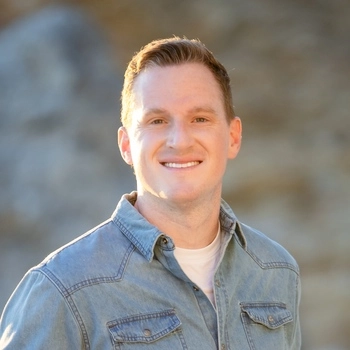
About Adam McDonald, PhD
Dr. Adam McDonald is a Licensed Psychologist who utilizes an experiential, trauma-focused, highly integrative, mindful-somatic approach to help people move from managing symptoms to resolving what’s underneath them. He understands that true healing requires integrating the mind and body, allowing the nervous system to return to a state of safety and connection. Deeply attuned to the realities of suffering and healing, Adam views himself as a fellow traveler in the therapeutic process. Learn more about him and discover his approach here.